

A kitchen can look beautifully finished and still feel frustrating when the most used items have nowhere graceful to go. The coffee maker stays out because it is used every morning. The toaster sits near the outlet because moving it feels like extra work. Mixing bowls, breakfast supplies, and small appliances slowly take over the counter, even in a kitchen with plenty of cabinets. That is where a sliding pocket door kitchen cabinet becomes more than a clever detail. It becomes a way to keep daily function close while giving the room a calmer, more polished look.
The appeal is easy to understand. Homeowners want a kitchen that feels clean without requiring everything to be hidden in deep storage. Contractors and designers want solutions that look intentional, install smoothly, and support real routines. A pocket door cabinet helps both goals by allowing the cabinet doors to slide back into the cabinet area when open, instead of swinging into the room. The result feels quiet, organized, and built for how people actually use the kitchen.
Why This Cabinet Detail Feels So Useful in Real Kitchens
The strongest reason homeowners look for pocket door cabinetry is not only because it saves space. It solves a daily tension between access and appearance. A regular cabinet can hide clutter, but once the doors are open, they often block movement or make a work zone feel crowded. A sliding pocket door kitchen cabinet gives the homeowner a way to open the cabinet, leave it open while working, then close it when the task is finished.
This is especially helpful in areas that are used repeatedly throughout the day. A breakfast cabinet can hold mugs, coffee supplies, tea, sweeteners, and small appliances in one organized zone. A baking station can keep tools, containers, and a mixer together without turning the main countertop into storage. A beverage area can feel like a finished design feature rather than an afterthought. The cabinet does not need to shout for attention because its value comes from how smoothly it supports the rhythm of the room.
The best version of this idea begins with a clear purpose. A pocket door cabinet should not be added only because it sounds modern. It works best when it protects a specific area from visual clutter, keeps a repeated routine more convenient, or helps a tight kitchen move better. When that purpose is clear, the cabinet feels custom rather than decorative.
A Better Way to Hide Appliances Without Making Them Hard to Use
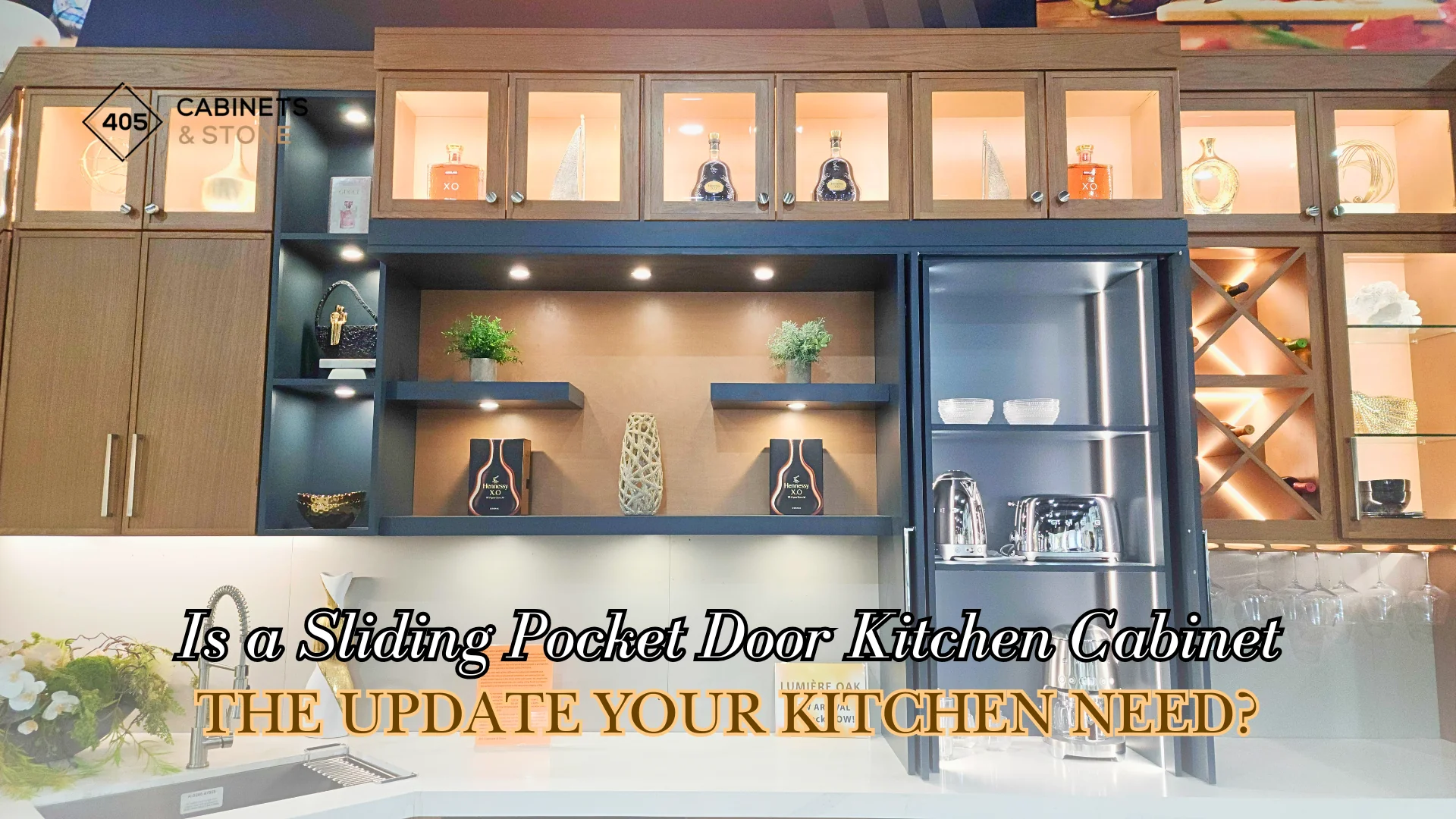
One of the most popular uses for pocket doors is the appliance garage. Many homeowners want their counters to look open, but they do not want to carry appliances in and out of lower cabinets every day. The appliance garage answers that problem by placing frequently used pieces behind doors, often on or near the countertop, so they remain easy to reach.
A sliding pocket door makes that idea feel more refined. When open, the doors tuck away instead of projecting into the kitchen. This matters around coffee stations, compact prep zones, and cabinet walls where several people may move through the room at once. The open cabinet becomes a practical work area, not an obstacle.
Designing this area well requires more than choosing a door mechanism. The interior should be planned around what the homeowner actually uses. A coffee area may need room for a machine, mugs, filters, and a nearby outlet. A small baking center may need vertical space for a mixer and enough surface area for ingredients. The success of the cabinet depends on the relationship between storage, reach, power access, and the surrounding work surface.
It also helps to keep the visible materials calm. When a pocket door cabinet is opened, the inside becomes part of the kitchen view. Clean cabinet lines, a measured countertop choice, and simple hardware allow the feature to look composed whether the doors are open or closed. Engineered quartz, sintered stone, and nano crystalized glass can support this kind of polished surface story when the rest of the kitchen design calls for it.
Where a Sliding Pocket Door Kitchen Cabinet Works Best
The location of a pocket door cabinet has a major impact on whether it feels effortless or awkward. It often works well on a cabinet wall, near a pantry area, beside a refrigerator, or at the edge of a kitchen where a beverage or breakfast zone can function without interrupting the main cooking area. In larger kitchens, it can create a refined station that keeps the room from feeling too open and undefined. In smaller kitchens, it can reduce door swing and help the layout feel less crowded.
The cabinet should be placed where the doors can fully retract and where the interior can be used comfortably. If the feature is too narrow, it may feel impressive in concept but limited in daily use. If it is placed in the wrong traffic path, people may still feel crowded even though the doors slide away. The best placement is usually tied to a real routine, such as making coffee, preparing breakfast, storing pantry items, or hiding small appliances after use.
This is also where professional design support becomes valuable. A pocket door cabinet has to work as cabinetry, storage, and a small work zone at the same time. The door movement, cabinet depth, shelf spacing, nearby outlets, and neighboring surfaces should be considered together. When those decisions are coordinated early, the finished kitchen feels natural instead of forced.
The Design Should Look Quiet When Closed and Useful When Open
A pocket door cabinet has two lives. Closed, it should blend into the kitchen as part of the larger cabinet composition. Open, it should reveal a useful zone that still feels finished. This is why door style, proportions, and hardware matter. If the doors are too visually heavy, the cabinet may dominate the kitchen. If the surrounding details are too plain, the feature may look more like a storage fix than a design decision.
Shaker and slim shaker cabinet styles can support this look because they offer structure without becoming overly busy. White, off white, light gray, dark gray, black, dark blue, and white oak can all work depending on the larger room. The important point is not to choose a color in isolation. The finish should relate to the neighboring cabinets, flooring, countertop, and light in the room.
Hardware should feel easy to use without becoming the main visual event. Long pulls can make tall pocket doors comfortable to operate, while simple knobs or understated pulls may suit smaller cabinet sections. The goal is to make the movement intuitive. A homeowner should not have to think about how to open the cabinet while holding a mug or moving through a morning routine.
Lighting can also change the experience. A deep cabinet can feel shadowy if the interior is not considered. Thoughtful lighting helps the cabinet feel like a usable station rather than a dark storage box. This is especially important when the cabinet houses coffee supplies, glassware, or ingredients that need to be seen quickly.