


Designing a kitchen that blends function, comfort, and beauty is one of the most rewarding aspects of a home improvement project. Among the most popular modern upgrades is the inclusion of an island – a feature that can completely transform how you cook, entertain, and enjoy your space. When thoughtfully planned, an island kitchen design can not only serve as the centerpiece of your home, but create a unique balance between practicality and visual appeal.
Understanding the Role of the Kitchen Island
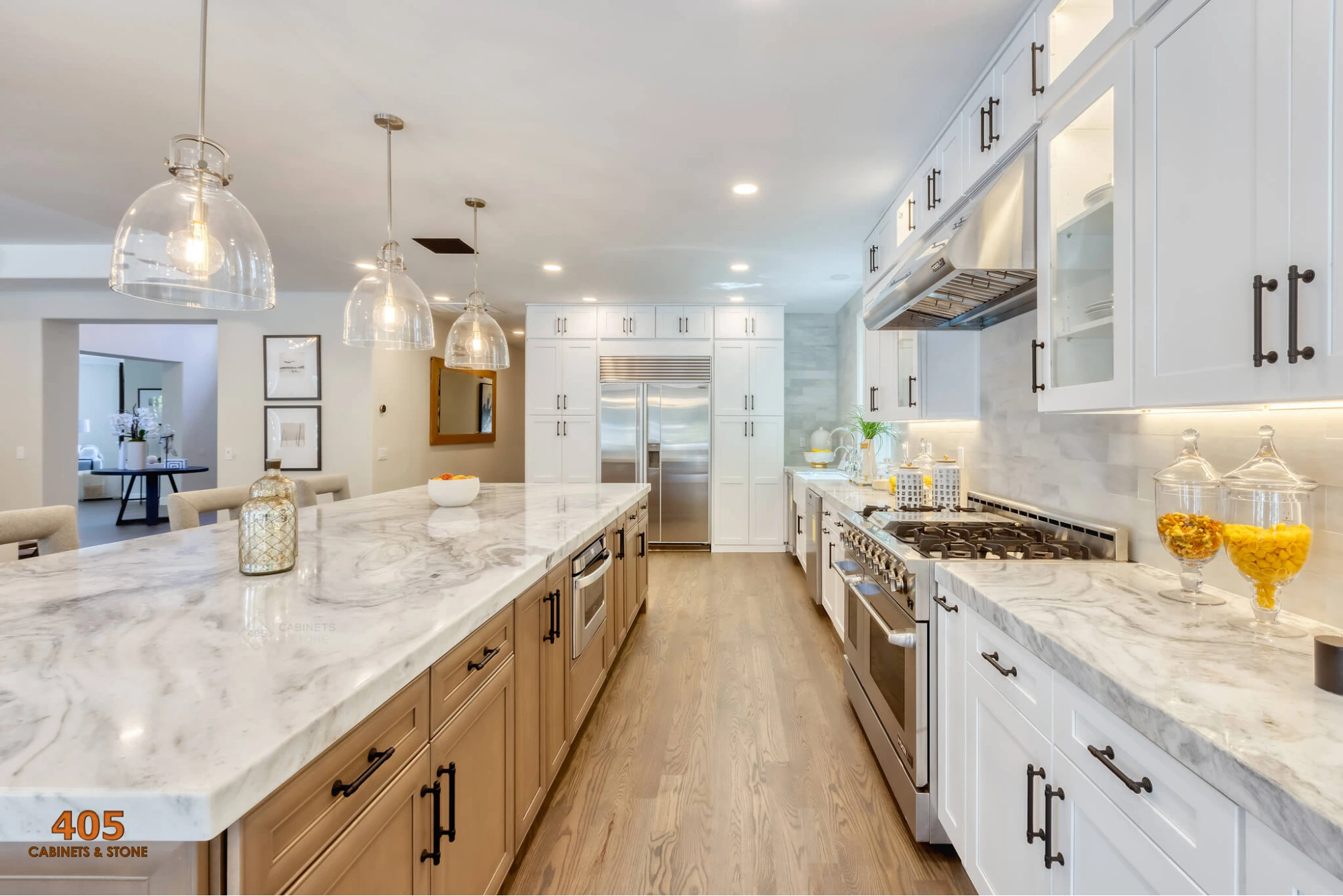
A kitchen island moves far more than just adding an extra countertop –it can act as the main hub for cooking, dining, and gathering; and depending on your kitchen layout, it may provide additional storage, integrate appliances, or serve as a casual dining area. To make the most of your design, you first need to decide what role you would like for your island to play. Families often use it as a communal spot for meals and homework, while avid cooks appreciate the prep space and proximity to appliances.
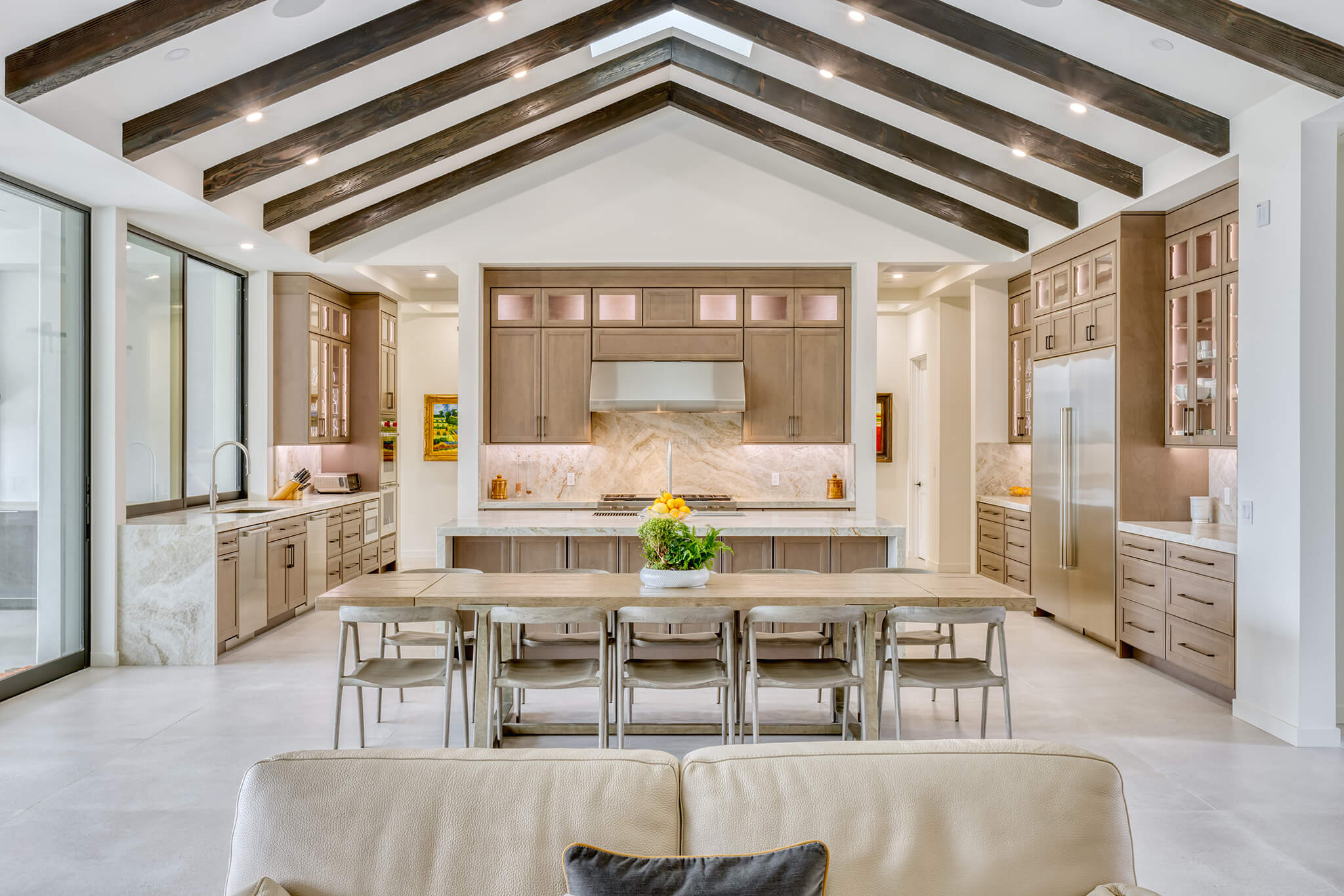
The versatility of an island makes it an essential element in open-concept living. It also creates a natural transition between the kitchen and adjoining spaces such as the dining or living room while – maintaining a sense of flow.
Maximizing Space and Functionality
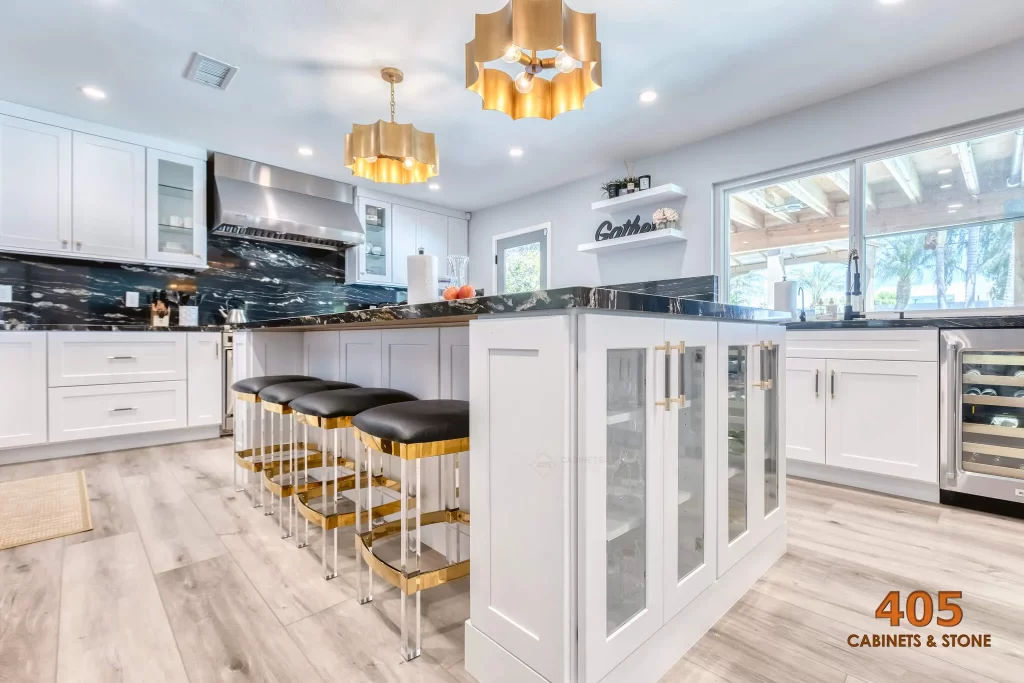
The size and layout of your kitchen should determine the scale of your island. A larger kitchen often has the option for and may benefit from a multi-level island with dedicated zones for cooking, seating, and storage, while a smaller space may only allow for a compact design that emphasizes efficiency.
Traffic flow is also a crucial consideration. Allow at least three feet of clearance on all sides of the island so multiple people can move around comfortably. In open-concept homes, the island should align with the room’s proportions, ensuring it feels like a natural extension rather than a piece of furniture that appears as an obstruction.
Functionality also comes down to smart storage. Deep drawers for pots and pans, pull-out shelves for pantry items, or hidden compartments for small appliances can help keep your kitchen uncluttered and streamlined.
Choosing the Right Materials and Finishes
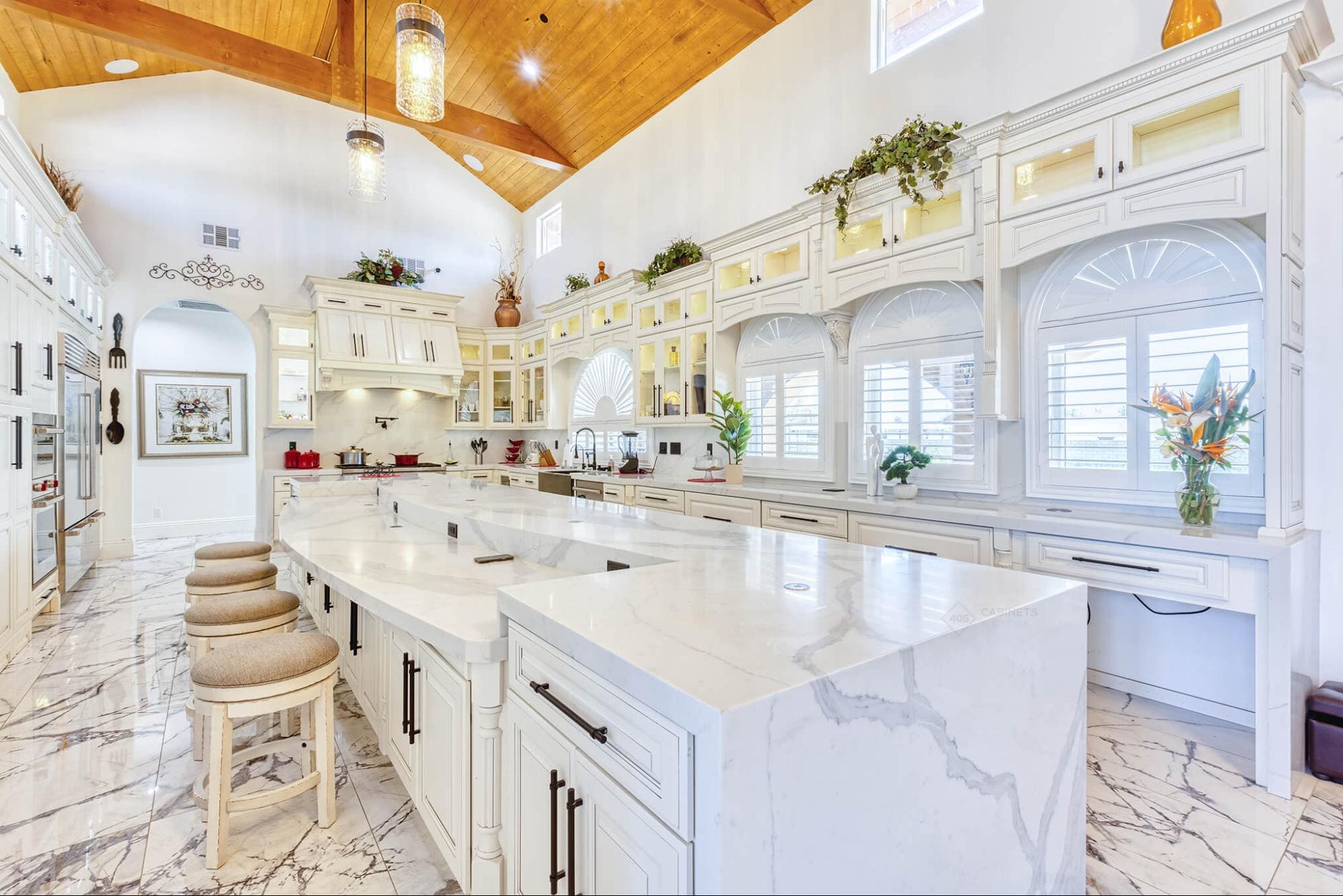
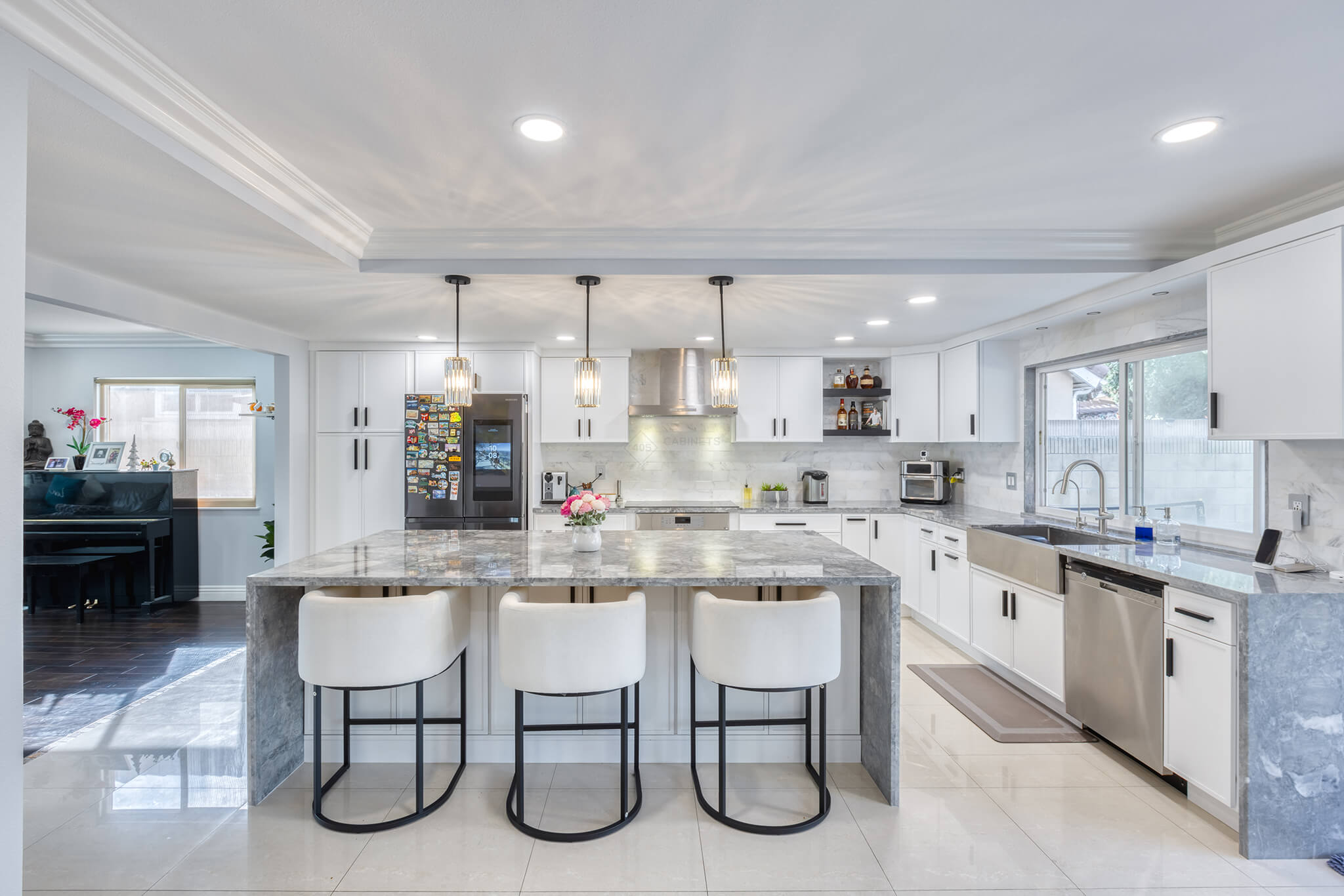
The choice of materials for your island should complement the overall design of your kitchen while introducing texture and interest. Stone countertops such as quartz, quartzite, or nano-crystallized glass are popular for their durability and timeless look. For a more modern approach, waterfall edges, where the countertop continues seamlessly down the sides, create a striking visual effect and adds dramatic lines and contours to your overall kitchen aesthetic.
The base of the island offers another opportunity for creativity. Painted or stained cabinetry in bold colors such as Navo or Classe Black , or warm wood tones that you find in Whisky Royale or Eden Spice, can create the desired contrast from the rest of the kitchen and make the island stand out as a statement piece. For homeowners who entertain often, incorporating durable finishes resistant to scratches and stains ensures the island remains as beautiful as it is functional.
Integrating Appliances and Features
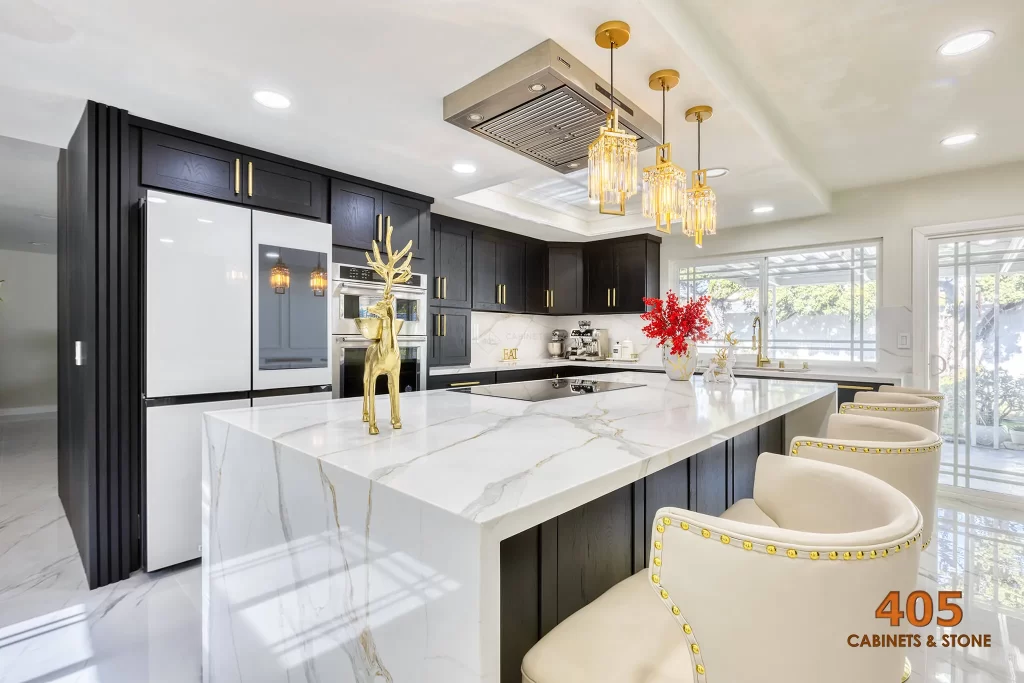
A well-designed kitchen island can house much more than just extra counter space. Many homeowners integrate cooktops, sinks, or dishwashers directly into the island to centralize food prep and cleanup. This also frees up the rest of the counterspace in the area, creating a more open feel. If you often entertain, consider adding a wine fridge, beverage cooler, or even a second oven.
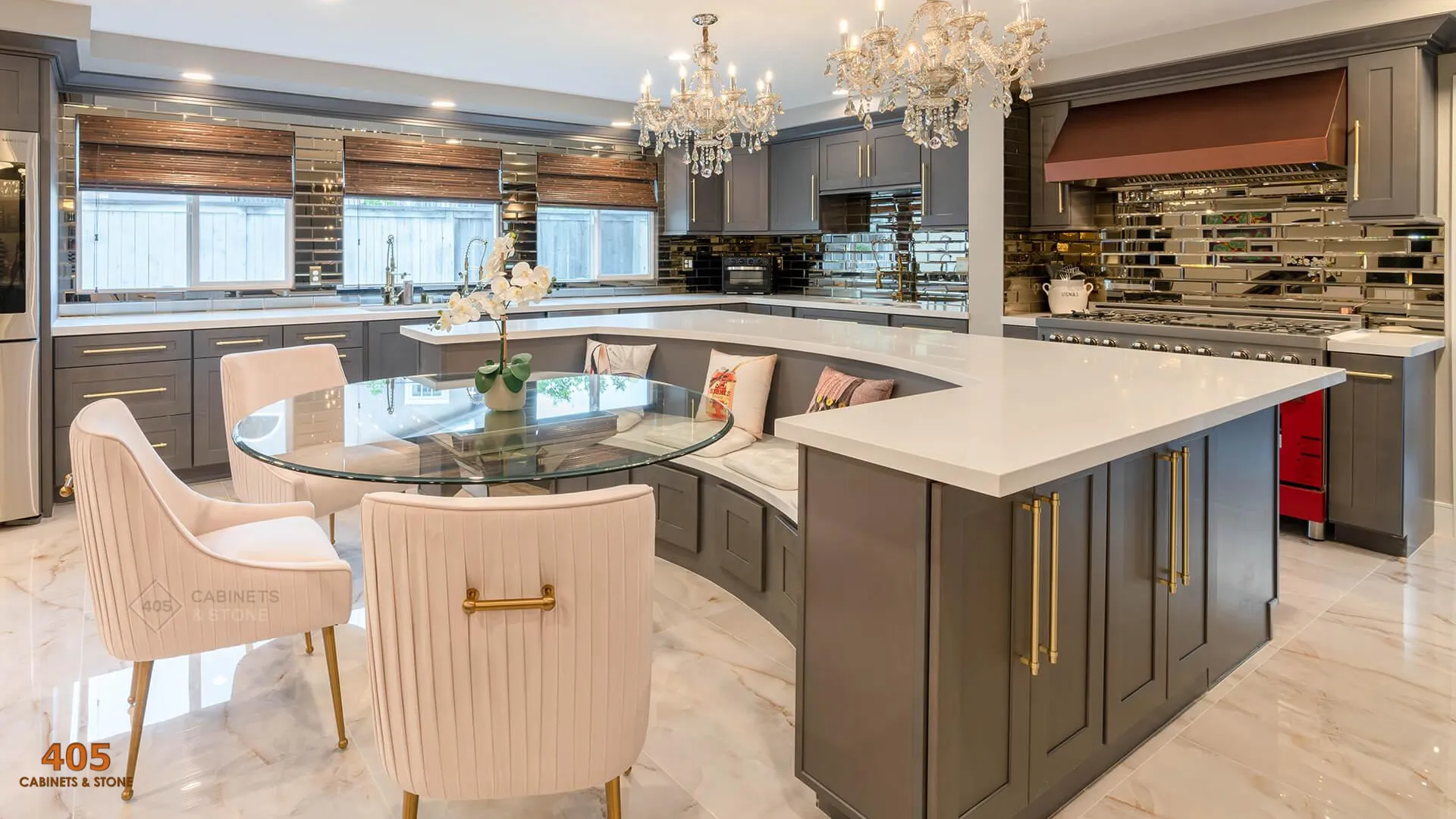
Lighting is equally important. Pendant lights above the island not only provide essential task illumination but also create an opportunity to showcase your design style. Whether you prefer sleek modern fixtures, industrial-inspired pendants, or classic chandeliers, lighting helps set the mood and highlights the island as the heart of your kitchen.
Creating a Gathering Place
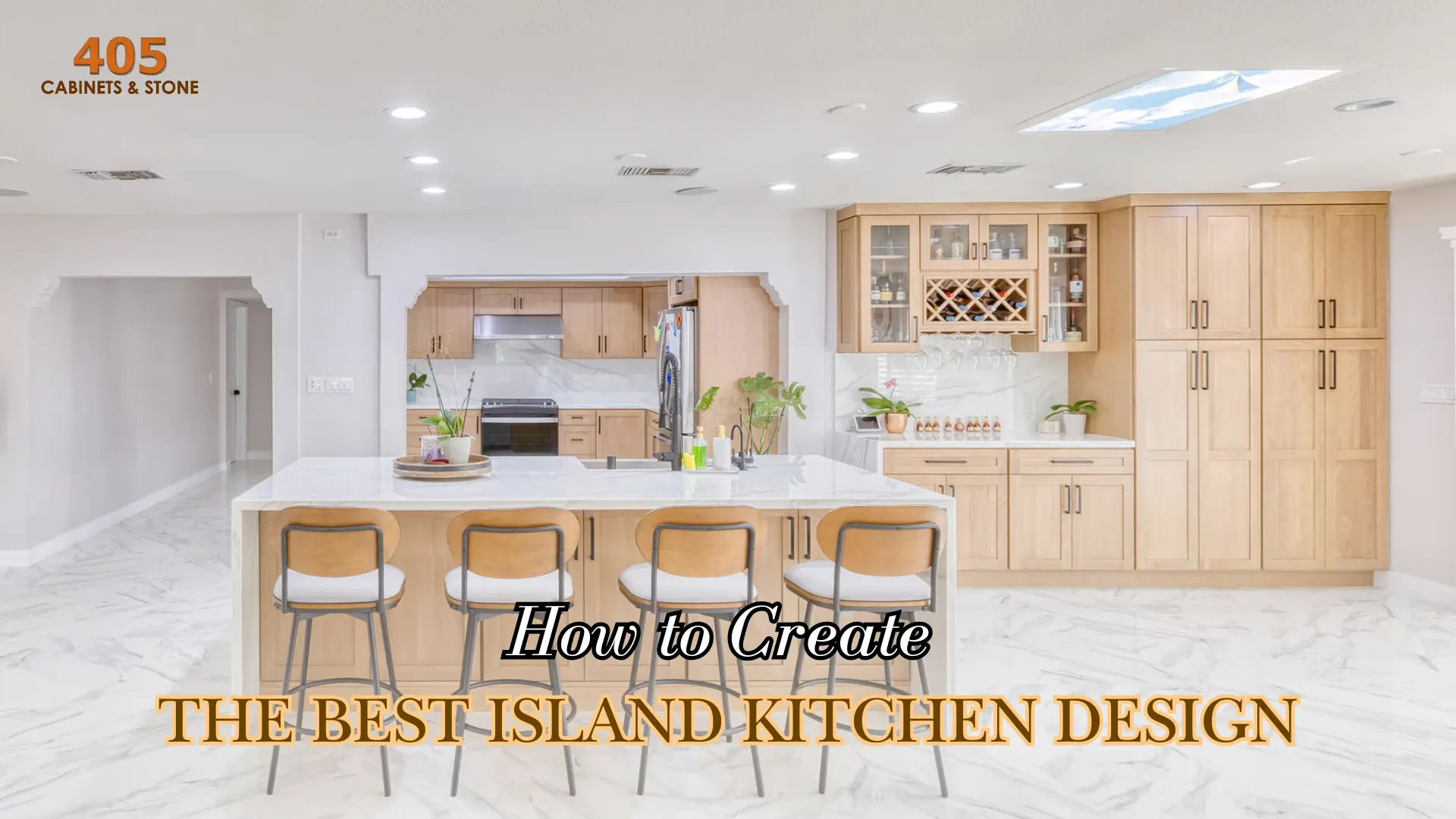
One of the greatest appeals of an island kitchen design is its role as a social hub. Therefore, adding seating around the island can transform it into a versatile gathering place where family and friends can linger. Overhangs on one or more sides provide space for stools without intruding into the cooking zone or access to storage areas.
The type of seating you choose should reflect the way you use your kitchen. Backless stools can easily tuck under the counter to save space, while upholstered chairs may offer more comfort for extended meals or conversations. The island becomes not only a place to cook but also a welcoming area for casual dining, entertaining, or simply enjoying a morning coffee.
Personalizing Your Island Kitchen Design
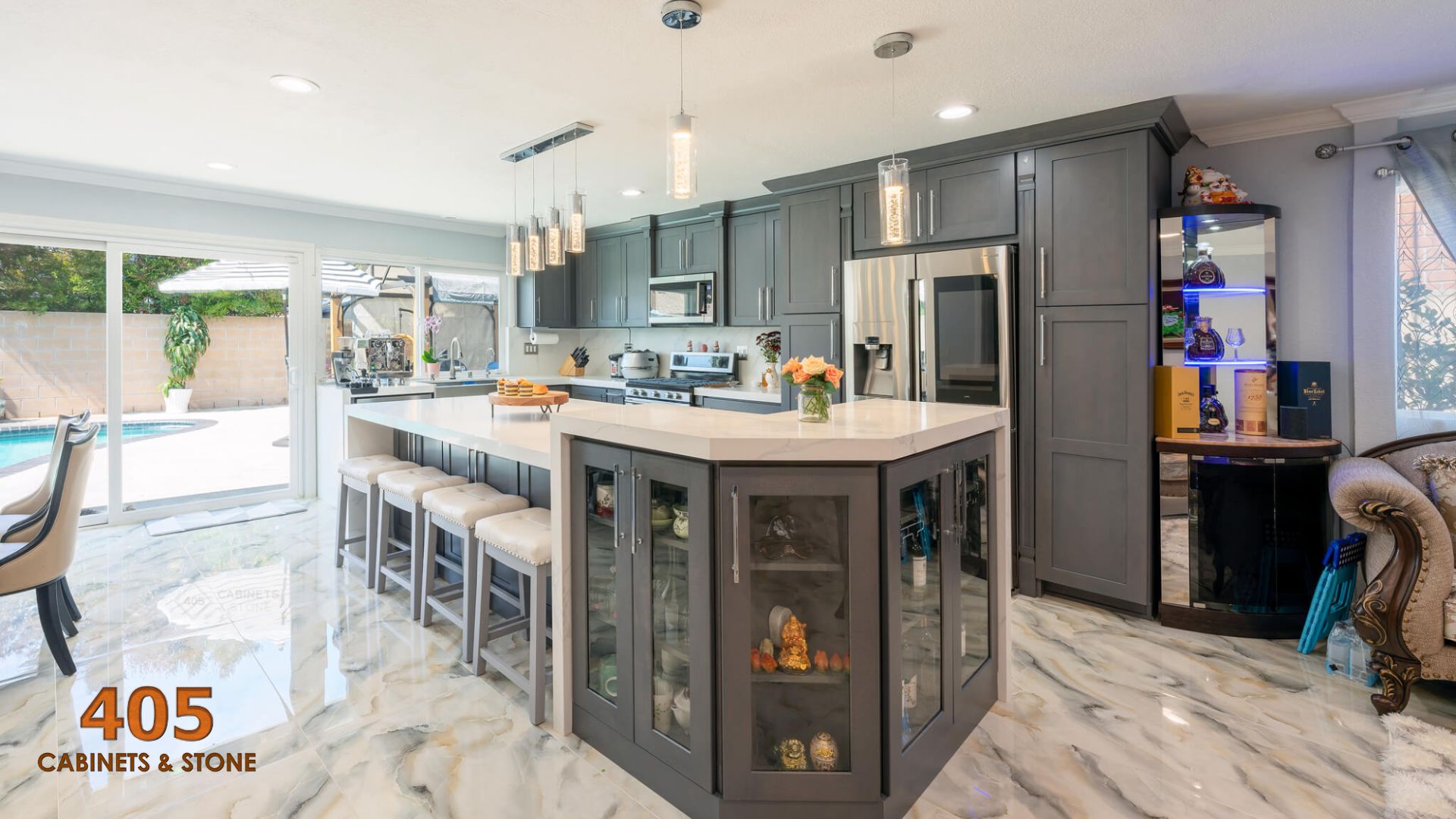
Every kitchen is unique, which is why personalization is key to achieving the best results. Think about how you use your kitchen day-to-day. Do you need more prep space for cooking? Extra storage for bulky items? Or a comfortable spot for children to do homework? Tailoring the design to fit your lifestyle ensures that your island is not only visually stunning but also incredibly practical.
Adding finishing touches such as decorative hardware, custom cabinetry, or unique countertop materials can make your island a reflection of your personal style. Whether you prefer a modern minimalist look or a more traditional aesthetic, your island can bring the entire kitchen together in a way that feels both cohesive and distinctive.
Conclusion
Creating the best island kitchen design for your space is about finding the right balance between beauty and functionality. Let the experts at 405 Cabinets & Stone assist you in choosing the right cabinetry, stone, and design to meet your needs and reflect your lifestyle. Our professional designers can assist you through every step in the process and help you create an island that will be the proud centerpiece of your kitchen.