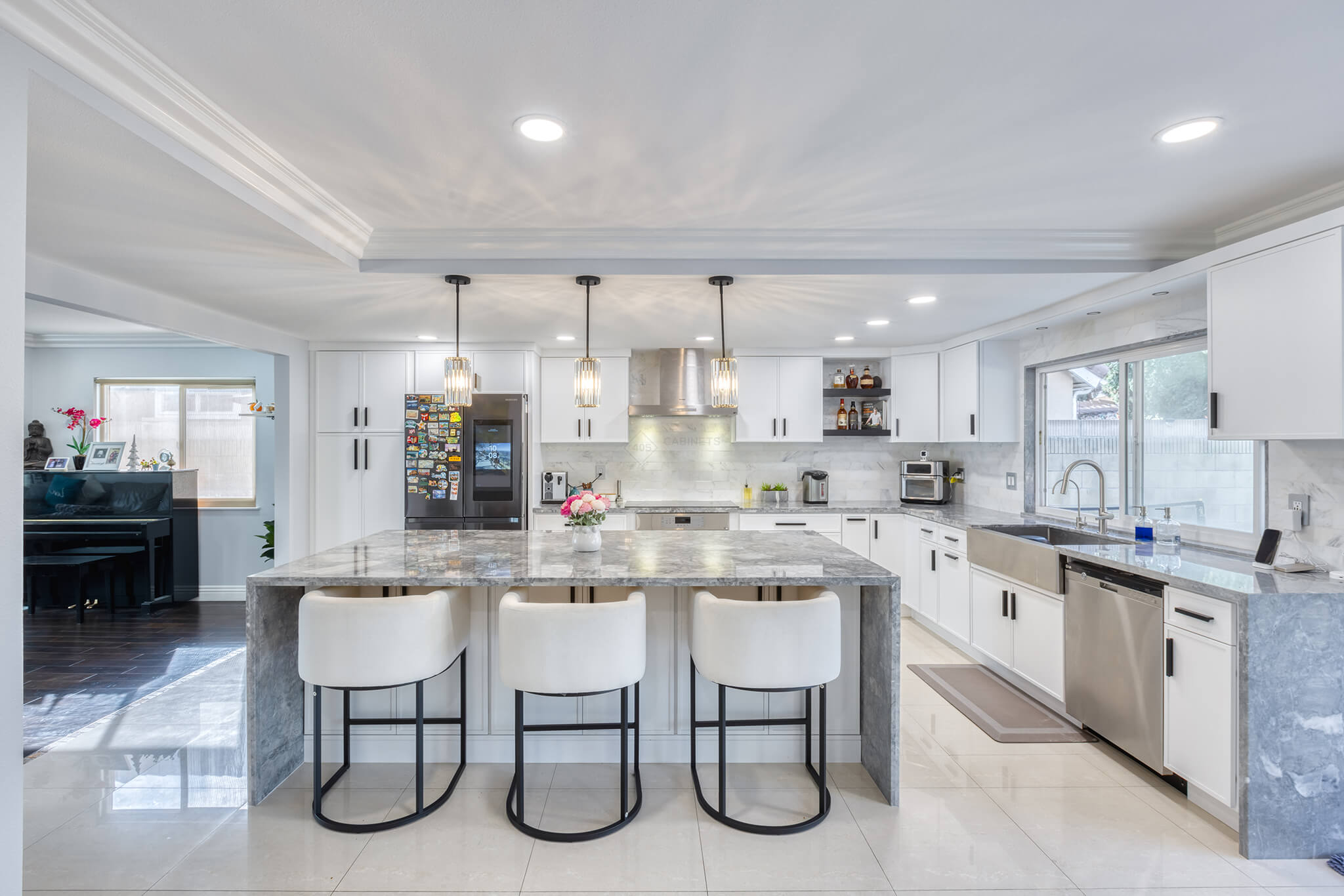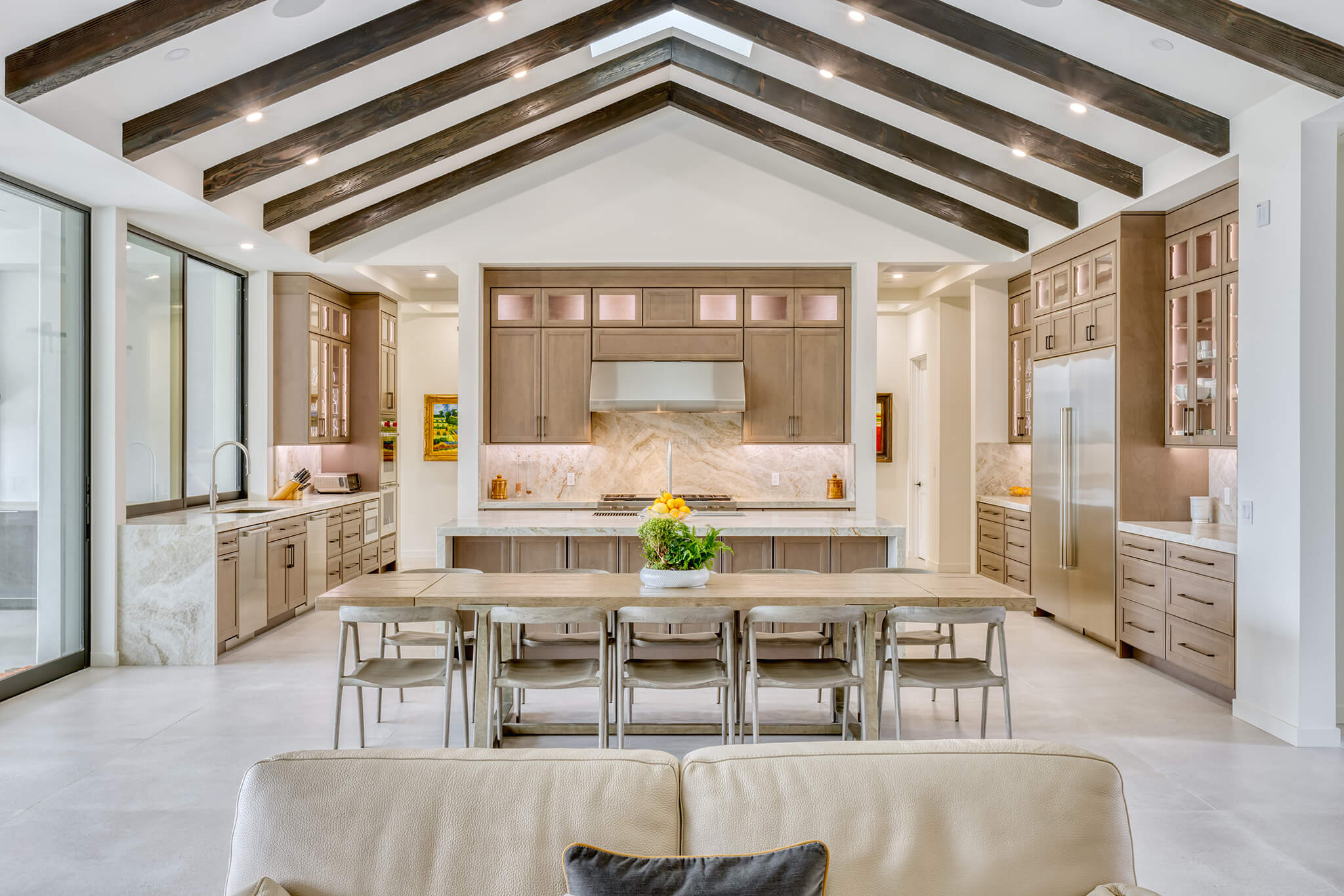


A long kitchen can feel like a blessing and a curse. On one hand, the abundance of linear space promises generously sized countertops and plenty of cabinetry. On the other, it can easily become a corridor that feels narrow, dim, and awkward to navigate. Many homeowners struggle with these spaces, but with the right design choices, a long kitchen can be transformed into the most inviting and functional room in the house.
Long Kitchen Design: Challenges & Potential
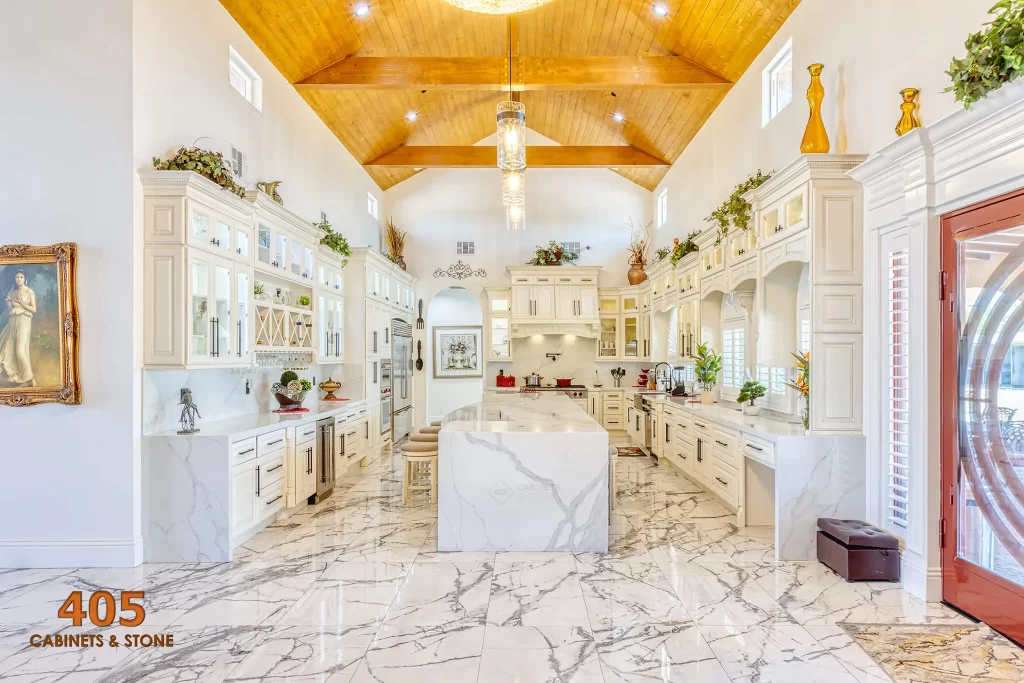
Designing within a long, narrow footprint often brings frustration. A homeowner may find themselves pacing up and down the room, juggling groceries at one end and cooking utensils at the other; or bumping into family members as they try to squeeze past. These challenges are real, but so are the opportunities to design something that is both beautiful and functional. A long kitchen provides uninterrupted stretches of worktop, space for dramatic sightlines, and the chance to create clearly defined zones for cooking, prep, storage, and socializing. The key is learning how to turn that length from a hindrance into an advantage.
Understanding Workflow and Choosing the Right Layout
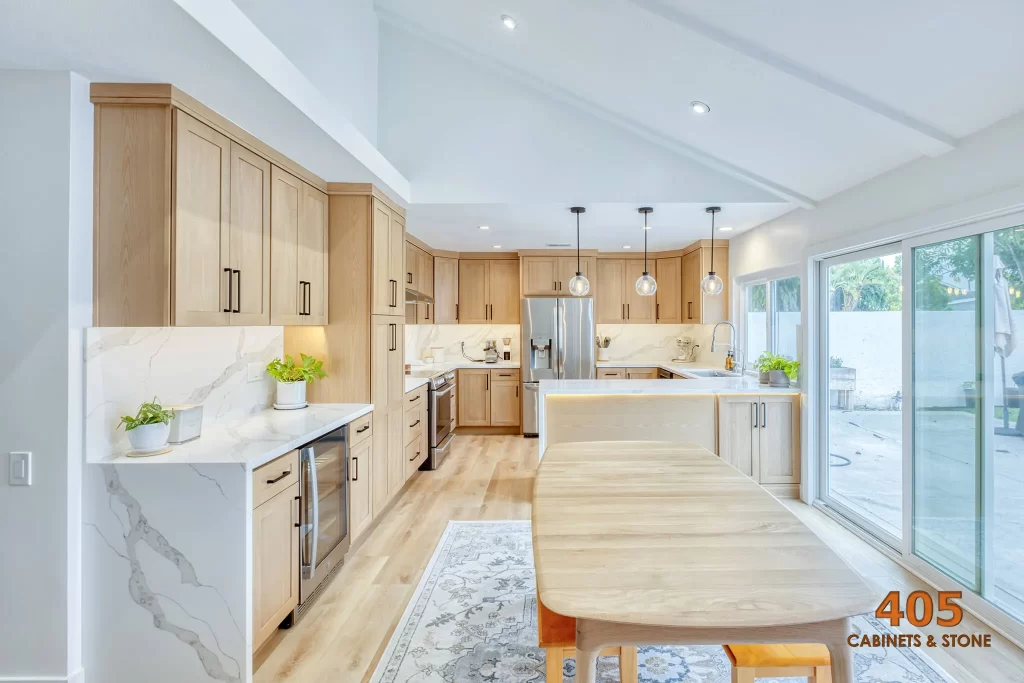
The layout is the backbone of any kitchen, but in a long room it becomes the determining factor between frustration and efficiency. Imagine stepping into a galley kitchen with cabinetry on both sides: everything is within easy reach, and the cook can pivot between sink, stove, and refrigerator without unnecessary steps. Now picture a single-wall design with a slender island in the middle, breaking up the length while providing additional prep space and casual seating.

The trick is to place functional zones where they belong. Cooking should not occur fifty steps away from the storage, and prep should not require weaving through traffic. When the sink, stove, and fridge form a comfortable triangle, and when prep surfaces sit close to storage, the kitchen begins to feel effortless, no matter how long it is.
Getting Proportions Right
Proportions can make or break a long kitchen. Too narrow a passage and two people cannot move without colliding. Too wide, and the cook wastes time marching back and forth. Ideally, the central walkway should feel generous enough for comfort yet compact enough to keep movements efficient. Appliance placement matters just as much. Few things are more irritating than realizing the refrigerator door swings directly into the oven handle, or that the dishwasher blocks the passage when open. Thinking through these details early prevents regret later.
Making a Long Kitchen Design Feel More Spacious
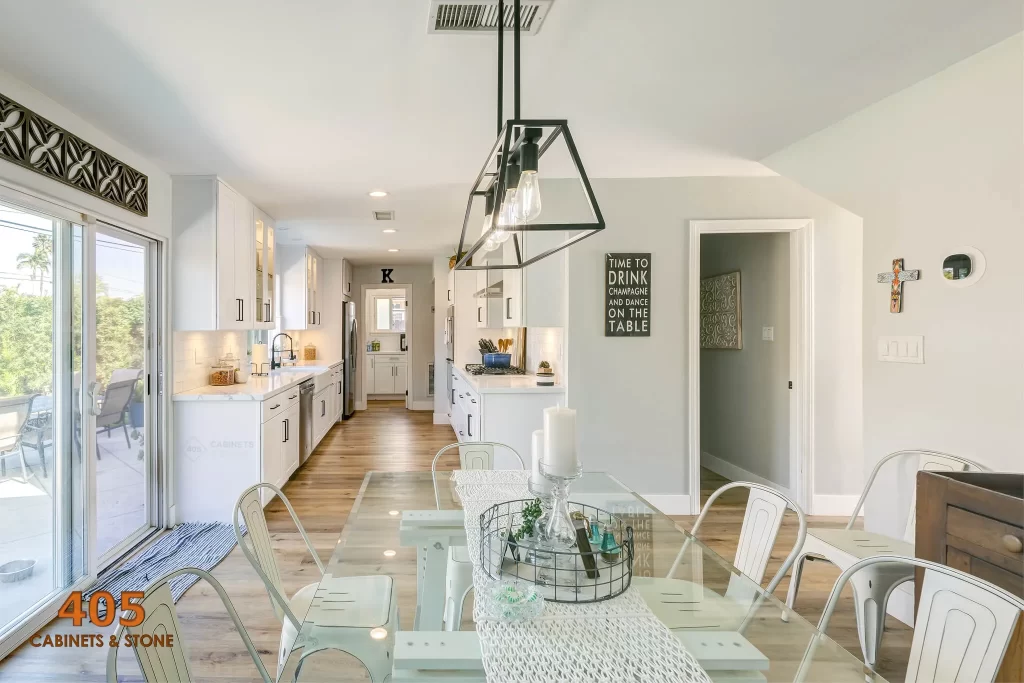
The most common complaint about long kitchens is that they feel like tunnels or narrow hallways. Fortunately, design has subtle tricks to widen perception. Pale cabinetry and reflective surfaces bounce light back into the room, softening shadows at the far end. Flooring patterns laid diagonally or across the room guide the eye outward rather than straight down the corridor. Even paint can play a role: a slightly darker color at the far wall creates a visual stop, making the room appear shorter and cozier instead of endless.
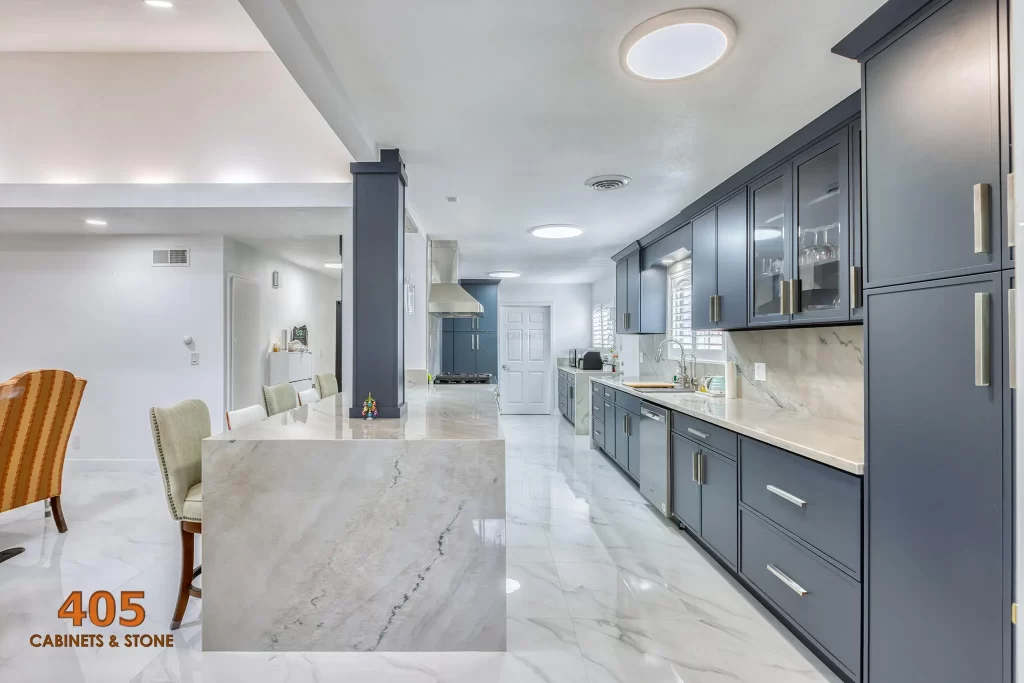
Storage Solutions That Work Harder
Storage in a long kitchen must be clever, because clutter quickly emphasizes narrowness and can actually hamper functionality. One homeowner described the frustration of crouching into deep cabinets only to lose pans in the back. Drawers solved that problem, making every inch accessible. Tall cupboards stretching to the ceiling remove wasted vertical space, while slim shelving along a wall keeps everyday items within easy reach. The aim is to give everything a place, avoiding the claustrophobic effect of countertops crowded with appliances, utensils or other kitchen items.
Lighting and Materials for Warmth and Depth
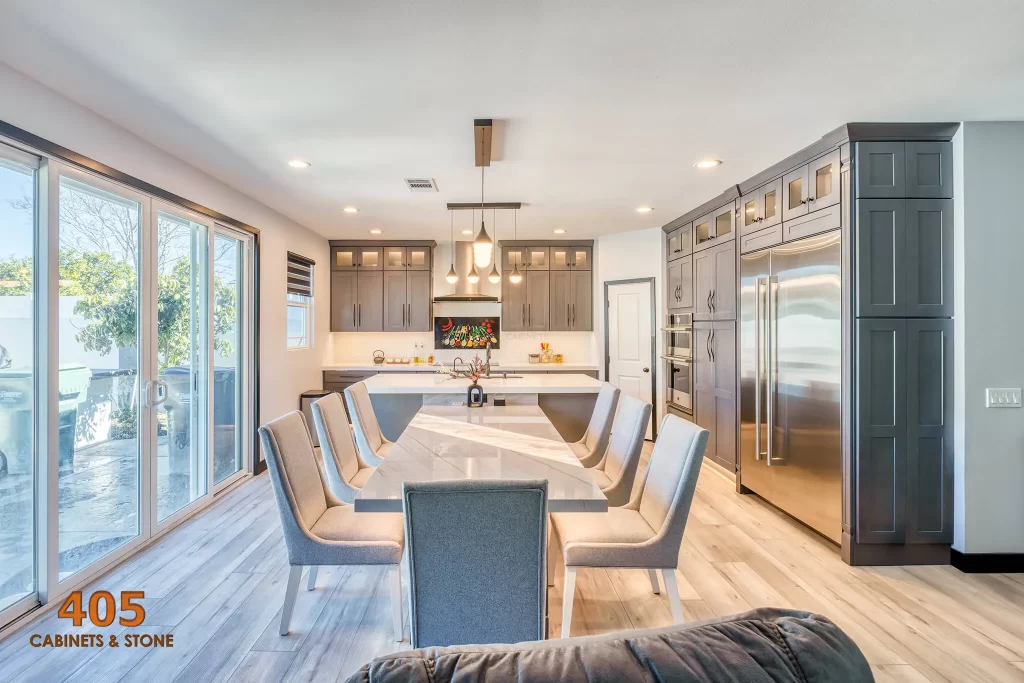
Lighting brings a long kitchen to life. Relying on a single central fixture leaves shadows at the ends, so layering becomes essential. Under-cabinet lighting brightens work surfaces, while pendants or recessed lights add rhythm along the length. Materials add personality too. A glossy backsplash or polished stone worktop reflects light, while warm wood tones or textured tiles prevent the space from feeling sterile. When combined thoughtfully, lighting and materials can transform a narrow corridor into a welcoming, layered environment.
Focal Points and Aesthetic Balance
Without careful design, a long kitchen can appear monotonous and cold. Creating focal points breaks that spell. A striking range hood draws attention midway down the room, and a bold patterned backsplash provides a natural pause for the eye. Even seating can serve as a focal element — a narrow breakfast bar at one end turns what could be wasted space into a social hub. By balancing strong features with calmer backgrounds, the room feels intentional rather than stretched.
Avoiding Common Long Kitchen Design Mistakes
Some of the biggest regrets in long kitchen renovations stem from ignoring basic principles. Overloading both sides with heavy cabinetry creates a claustrophobic canyon. Neglecting lighting leaves one end of the kitchen in gloomy darkness. Placing the fridge far from the cooking zone results in endless back-and-forth trips. And choosing dark, heavy finishes without lighter contrasts can make the room feel oppressive. These mistakes are avoidable, and homeowners who plan thoughtfully rarely make them twice.
A Real-World Scenario
Consider a family with a thirty-foot-long kitchen, just ten feet wide. At first, the space felt like a hallway more than a heart of the home. By placing cabinetry and appliances along both walls and introducing a narrow island in the center, they created a natural flow. The island doubled as a prep space and a breakfast bar, while pale cabinets paired with a reflective backsplash lifted the light. A bold tile wall at one end became the visual anchor, turning what was once dead space into an eye-catching feature. The transformation shows how thoughtful choices can make even the longest kitchen feel lively, functional, and warm.
Bringing It All Together
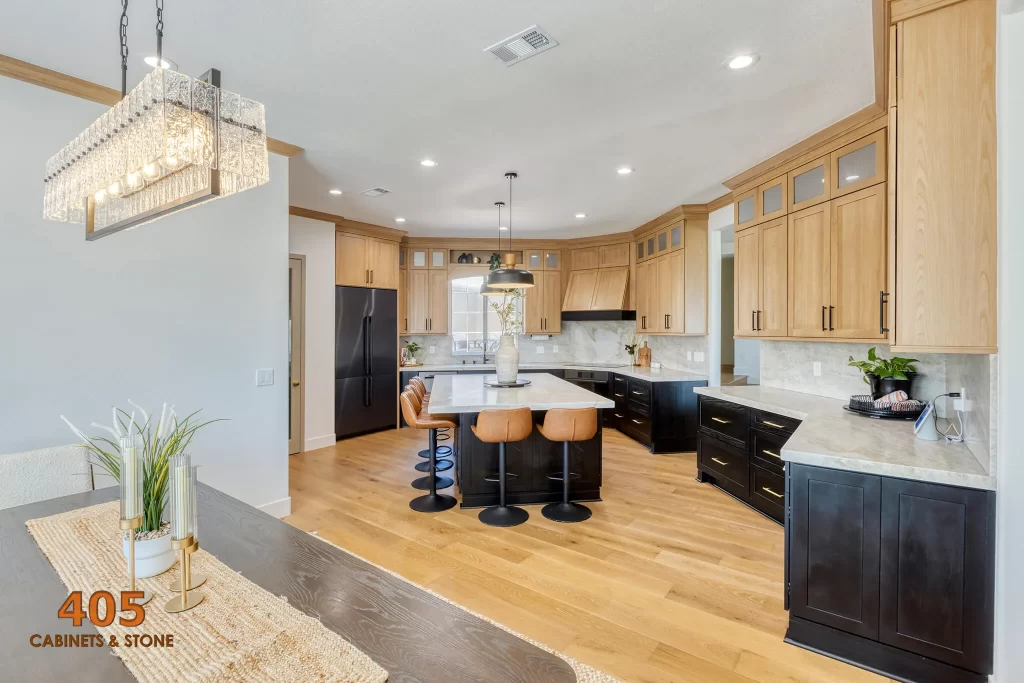
Designing a long kitchen is about balance. It requires marrying practicality with beauty, efficiency with comfort. With the right layout, thoughtful proportions, smart storage, layered lighting, and well-placed focal points, a room that once felt narrow and endless can become the centerpiece of daily life. The length doesn’t need to be a challenge — it can be the very feature that makes the kitchen both striking and unforgettable.